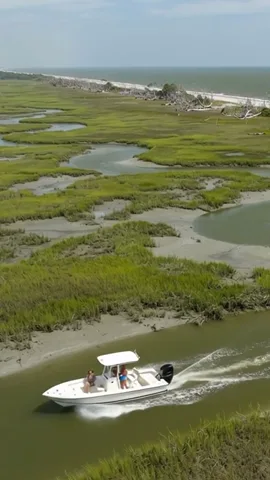
NautiTea is a hard iced tea out of Mount Pleasant, South Carolina. We made them a cinematic 30 second commercial called The Long Way: a whole day on the boat, dawn to sunset, with a cast, a location, a written score and a finished mix. No crew, no travel, no permit and no boat.
Shown with the client's written permission to name them. Every frame is AI generated and labeled as such wherever it runs.
The Long Way. 30 seconds, 1920 by 1080, mixed for broadcast loudness.
The product is sessionable: ninety calories, no sugar, 4.5 percent. Sessionable is not a bullet point, it is a way of spending a day. So the film is one whole day given over to nothing, and it lands on golden hour, the one territory in this category nobody had claimed and the one this brand already owned on its own can.
We start by mapping what every competitor already owns creatively, so the idea we bring is one the category has not already heard. That research is what pointed us at golden hour, and it is why this spot sounds like nobody else in the aisle.
Alcohol advertising has real rules, and they shape the board rather than trim it afterwards. The boat is anchored in every frame that holds a can, nobody drinks on camera, and everyone reads comfortably over legal drinking age. It is built to clear review the first time.
Every claim behind the strategy is written down with the source it came from, then independently re-checked before it informs a decision. Clients get sourced research, not assertions, and it travels straight to their legal team.
The client saw every shot as a still and shaped it with us over several rounds before one second of motion was generated. Storyboard is the cheapest place in the world to make a film better, so we spend the time there, and by the time we roll the board is exactly the film the client wants. The route it follows is a trip a Charleston boater actually takes: out of Shem Creek, through the harbour past the Ravenel Bridge, north up the Intracoastal Waterway, out to Capers Island, and home at sunset.
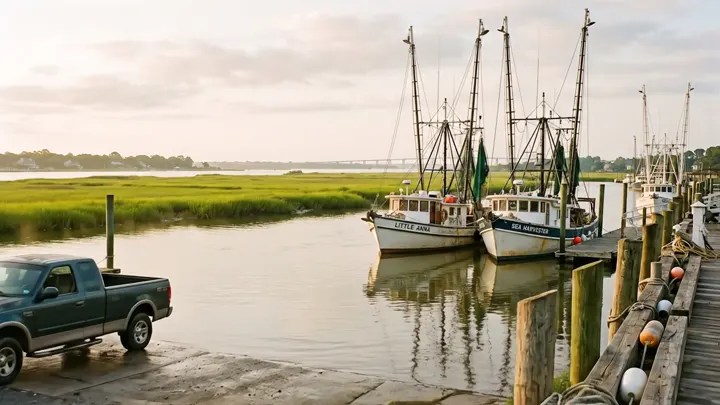
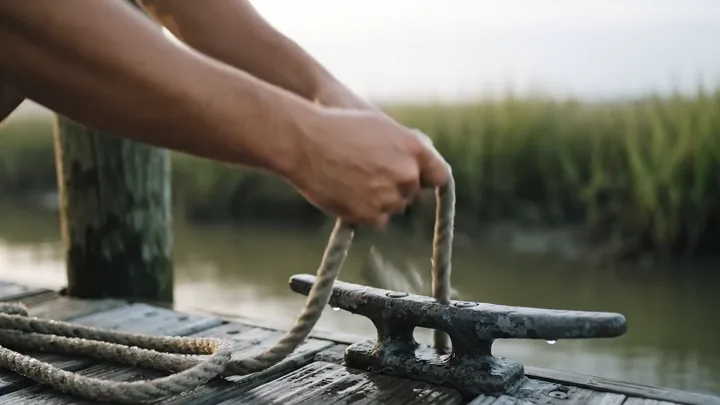
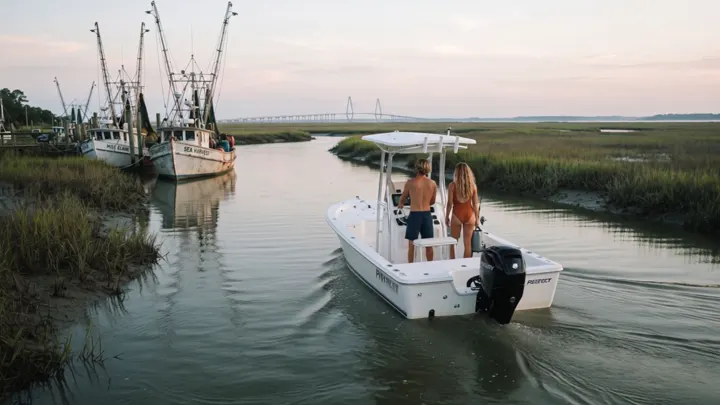
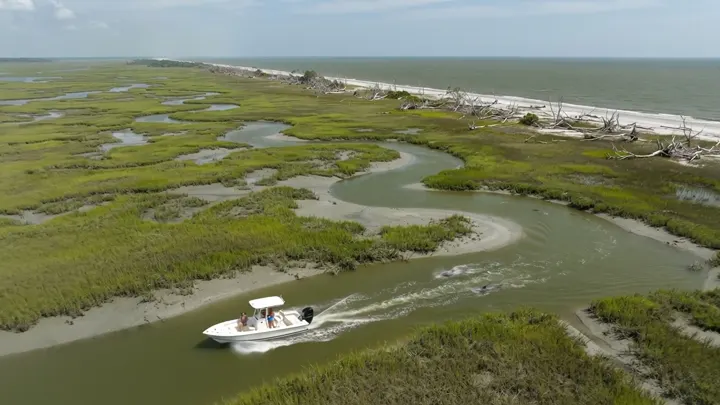
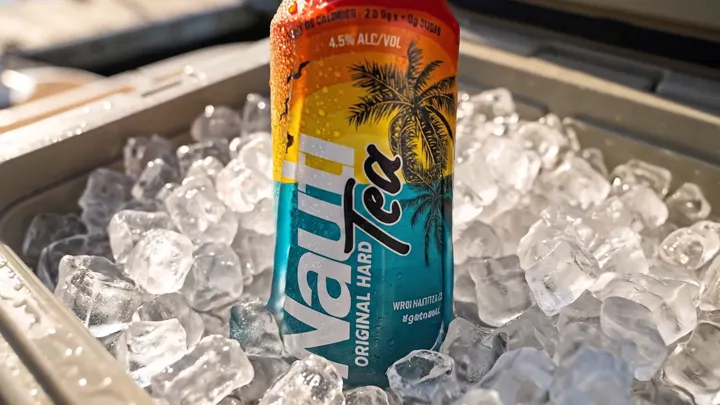
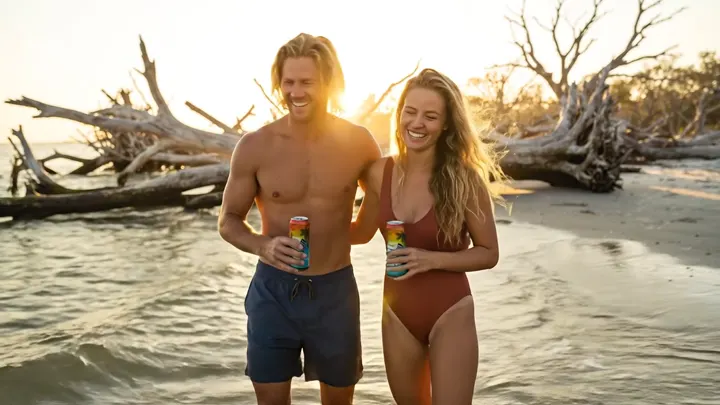
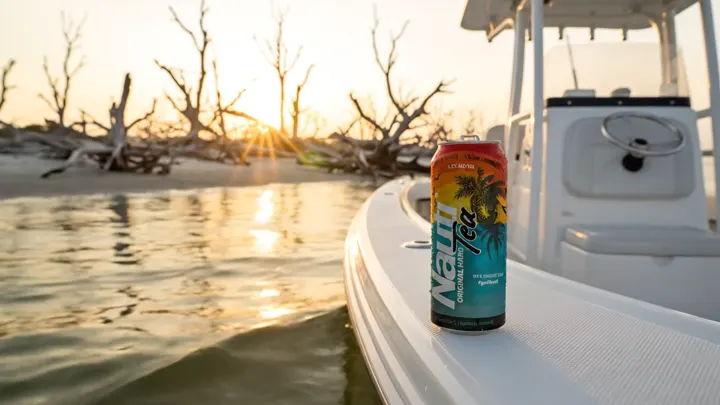
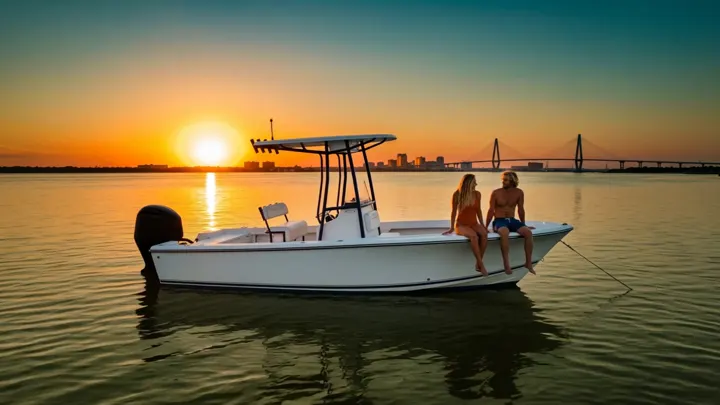
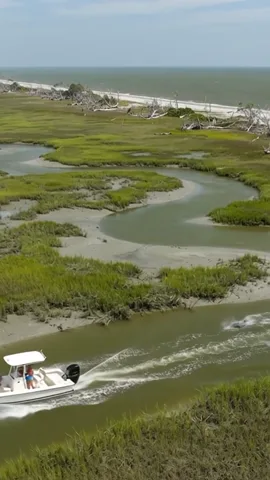
Generative models are brilliant at one beautiful frame and indifferent to everything that has to hold across a whole film. We have built techniques for the three that decide whether a spot reads as a piece of advertising or as a collection of pretty shots.
The same two people, the same wardrobe, the same boat and the same can in every shot, because a viewer clocks a change even when they cannot say why. We hold it with a locked written specification carried through the entire production, and every frame containing the product is anchored to the client's own can artwork so the product stays the product.
This film had to convince people who live there. So the water is the opaque olive green the Lowcountry genuinely is rather than the postcard blue a model reaches for, the sand is pale grey tan, the palms are fan fronded palmettos, and the landmarks sit where they actually sit. We research a place before we generate it, because locals are the audience who notice.
Light runs continuously from dawn to sunset across the cut, shots bookend each other, the product hero is given silence, and the mix is built in layers with the sound design timed to the picture. It is directed and edited like a commercial, because that is what it is.
A voice over is half of what makes a spot work, and a single generated take is a lottery ticket. So we wrote our own tooling around the leading voice model. It records every line of the script separately, produces a spread of versions of each one across deliberately different deliveries, and measures and level matches all of them so they can be judged on performance alone. Then we listen, line by line, and cast the read the way a director would.
"Nauti Hard Tea."
"Made for days like this."
This is our tool, and the client sits in it with us rather than waiting on a file. Three of each line are above and the full session ran to thirty. Because every line is placed individually instead of laid under the picture as one continuous take, a single word can be recast in minutes without disturbing a frame of the film.
Most vertical cutdowns are a centre crop, and a centre crop throws away the shot. On this film it would have dropped the boat out of the aerial altogether. Every shot gets its own framing decision instead, two of them follow the action, and the end card is rebuilt at vertical resolution so the brand lockup arrives whole.


One production yields the hero 30, the vertical for feed and the cutdowns for paid. That is the supply argument for AI video, and it only holds when every format is finished properly rather than exported.
A conventional shoot for this film means a crew, a charter, a drone operator, a permit for a state owned island, and a sunset that has to cooperate on the day you booked it. This was made in a day, and the client can change his mind about a single line at four in the afternoon and still have the finished spot that evening. That is the real argument for AI video production.
If you sell something you could film, we can probably make the ad without filming it. Start with the strategy rather than the software: our digital marketing team decides what the video is for before anything is generated, the results page shows what our work has done for other clients, and the same production feeds the vertical cutdowns our paid social ads run on.
Book an AI Growth Session. We look at what you sell and where your buyers watch, and you leave with the plan and the price in writing, whether or not you hire us.